
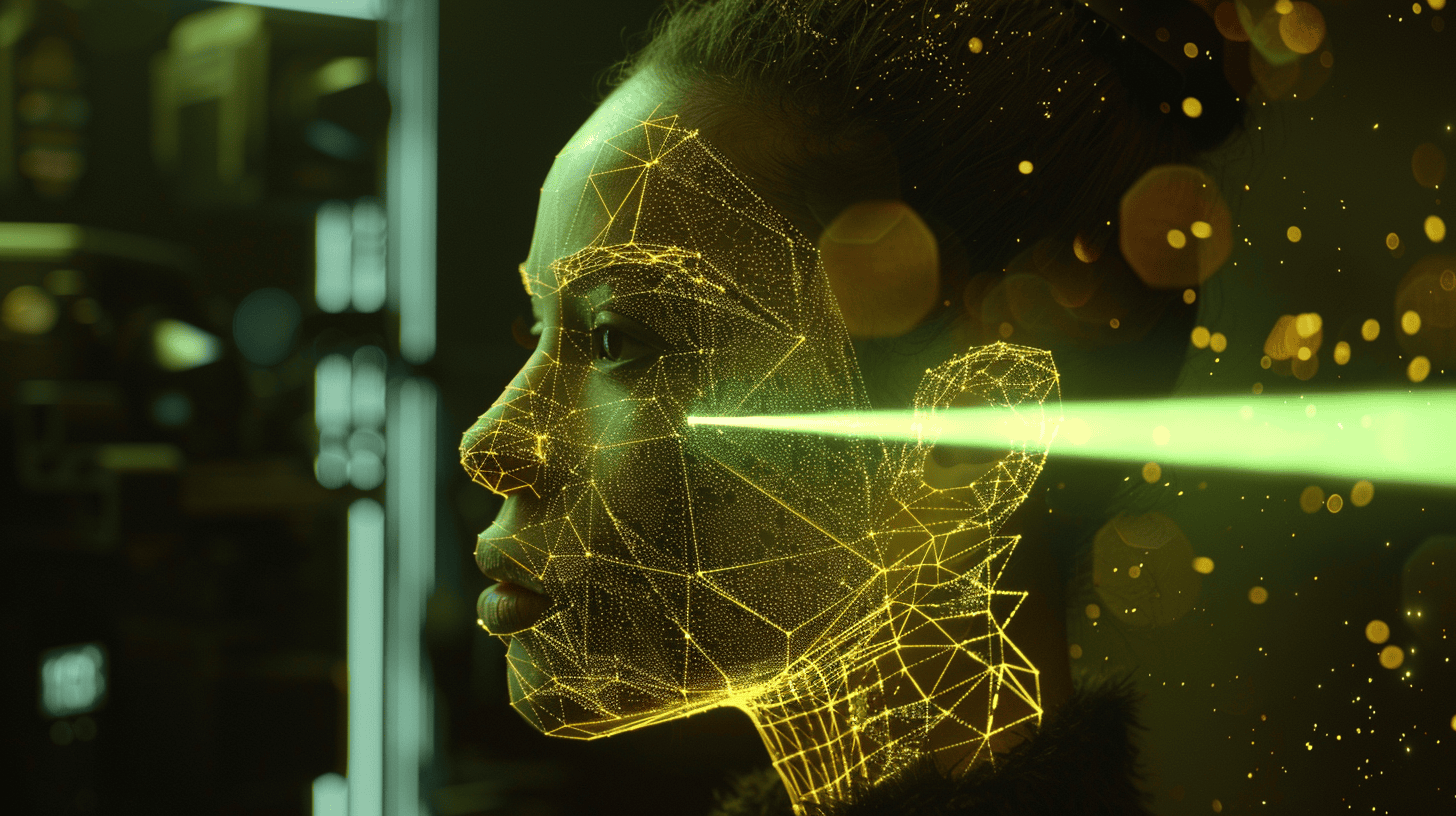
The Sci-Fi Concept
In Ari Folman’s film The Congress, an aging actress sells her digital likeness to a movie studio, undergoing a total body scan that liquidates her physical career. Her digital avatar is frozen in perpetual youth, acting in films she never steps foot on, while her physical self fades into obscurity. For years, this was the ultimate sci-fi dystopia—a cautionary tale about the corporate colonization of human identity, mirrored in shows like BoJack Horseman where a star’s digital clone acts without their consent.
The Non-Fiction Reality
The contract is no longer fiction. In 2026, the entertainment and marketing industries have moved past the experimental phase of digital de-aging. They are now actively constructing a legal and technical framework designed to decouple a performer’s labor from their physical presence.
The infrastructure enabling this shift relies on hyper-localized, real-time avatar pipelines like Epic Games’ MetaHuman framework, running alongside high-fidelity audio-diffusion models. Hollywood production houses, international advertising agencies, and AAA video game studios are deploying these pipelines to build permanent, fully programmable “Digital Twins” of talent.
[LEGACY PRODUCTION] ──> Physical Performance ──> On-Set Shoot ──> Linear Payroll
[BIOMETRIC PIPELINE] ──> Initial Scan Data ──> Neural Likeness Node ──> Continuous Automated Output
Code language: CSS (css)
Rather than contracting an actor for a specific multi-month shoot, legal teams are introducing aggressive “Biometric IP” riders into standard talent agreements. These clauses grant corporations the right to harvest high-resolution facial geometry, voice data, and micro-expression telemetry.
Once processed, these neural models generate automated performances for hyper-targeted localized ads, cross-lingual synthetic voice dubbing, and secondary media appearances. An actor can “perform” in an international marketing campaign or a major video game expansion while never stepping onto a soundstage, their identity streamed straight from a data server.
The Friction Point: The Liquidation of Identity Ownership
The core crisis of the biometric asset economy is the total elimination of worker agency over their own physical self. When an individual’s voice, face, and expressive nuances are legally reclassified as corporate-owned intellectual property, the traditional relationship between labor and identity collapses. If your biological likeness can be leased, traded, or seized under a bankruptcy proceeding by a corporate entity, your physical body ceases to be an independent agent. You are reduced to a legacy meat-suit hosting an active, monetized digital clone that you no longer control.
The Colonization of the Persona
This technical transition completely rewrites the legal boundaries of human expression. Historically, copyright and trademark law protected creative outputs—a specific recording, a written script, a finished film. A person’s likeness was protected under nebulous “Right of Publicity” statutes that assumed identity was inherently tied to biology.
The biometric contract strips away that biological protection. By converting a human face and voice into a generalized neural network model, corporations can treat a human persona as a software application.
The immediate economic impact is a severe hollow-out of industry labor. Voice actors, background extras, and mid-tier television performers are being forced to choose between signing away their long-term biometric telemetry or being entirely locked out of the production ecosystem.
Visually:
Human Persona ──> Converted to Neural Model ──> Treated as Software Asset
                                                ├── Unlimited Scale
                                                ├── Zero Ongoing Royalties
                                                └── Permanent Studio Ownership
Code language: JavaScript (javascript)
Once a studio holds the generative weights for a performer’s voice and likeness, the need for ongoing creative negotiation disappears. The asset can be deployed infinitely, stripped of its biological limitations, running automated performances long after the physical creator has left the union, aged out of the demographic target, or passed away.
The View From Orbit
From our high-altitude observatory, the deployment of biometric likeness networks reveals a profound shift in how human identity is managed. We are witnessing the birth of a dual-track human experience: the physical individual living out an analog life on the ground, while their digital clone orbits the global media landscape as a liquid corporate asset.
As these generative likeness engines achieve absolute fidelity, the biological origin becomes secondary to the digital duplicate. The satellites are observing a civilization where human beings are slowly being outscaled by their own automated likenesses—surrendering the exclusive rights to their own faces and voices to build an immortal, corporate-owned archive of synthetic humanity.