
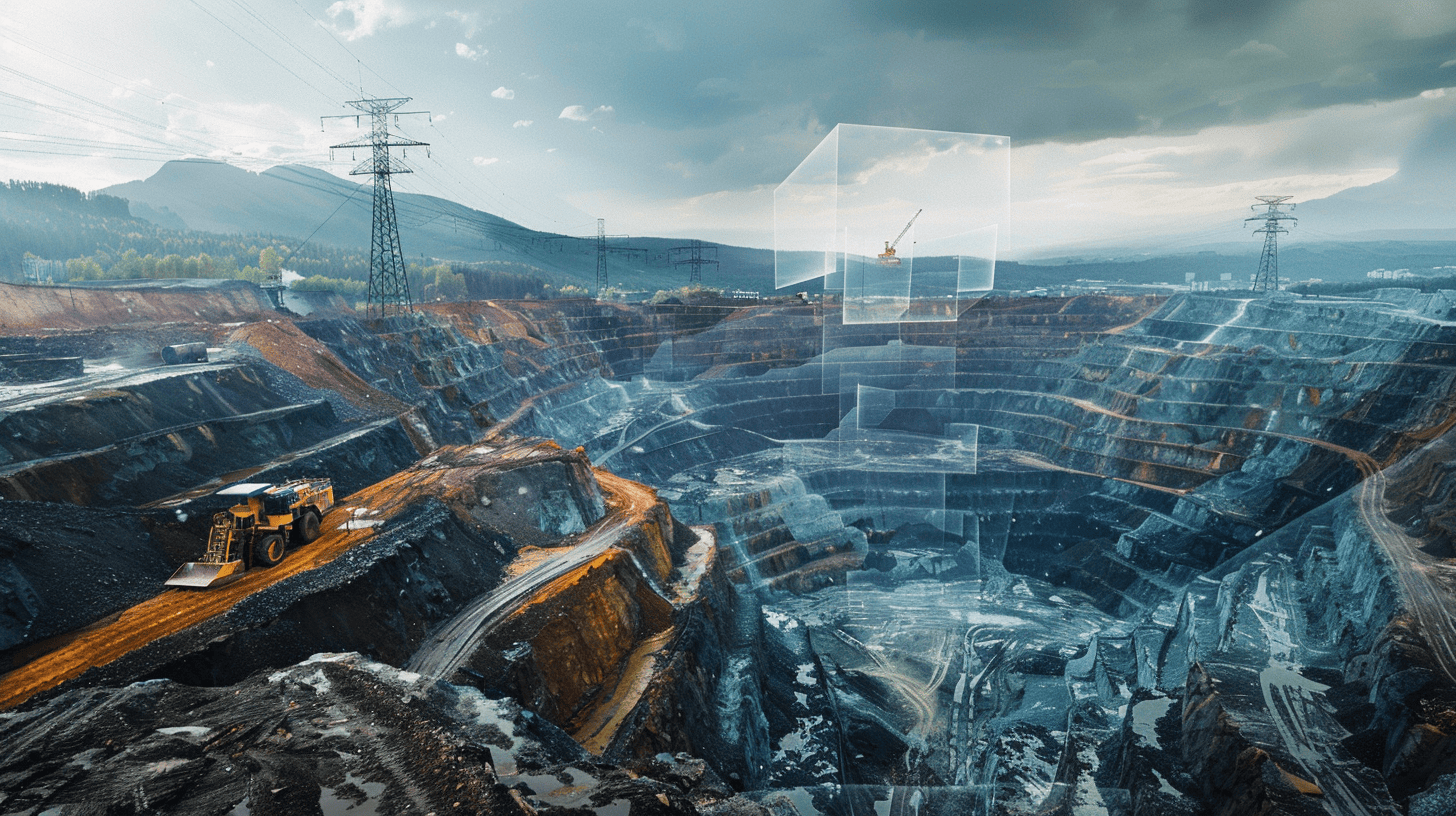
The Sci-Fi Concept
In the clean, frictionless futures of science fiction, virtual worlds are entirely weightless. From the infinite construct of The Matrix to the crystalline holographic chambers of Star Trek, simulated environments exist as pure, ethereal mathematics. They operate seamlessly in the background, drawing from seemingly infinite, invisible energy reserves without ever making a dent in the physical world outside.
The Non-Fiction Reality
From an orbital perspective, a virtual world is not weightless—it has a massive, crushing anchor in the earth’s crust. It is a physical footprint of concrete foundations, hyper-dense silicon arrays, copper plumbing, and roaring cooling infrastructure.
We have entered a stark reality where the race to build infinite, real-time generative worlds has collided with the rigid limits of physical physics and electrical grid capacity.
Generating a single, continuous, reactive 4K 3D video stream at 60 frames per second using autoregressive world models is one of the most computationally punishing workloads ever devised. Unlike standard cloud applications or legacy video games that simply load pre-rendered textures off a local drive, an AI world engine must recalculate every single pixel, lighting bounce, and geometric vector on the fly, millisecond by millisecond.
[LEGACY SERVER LOAD]    ──> Read Static Asset Data ──> Deliver File Stream ──> Nominal Power Draw
[GENERATIVE LWM LOAD]   ──> Live Matrix Math ──> Constant GPU Inference Loop ──> Exponential Grid Strain
Code language: CSS (css)
As mega-corporations scale localized spatial platforms like Roblox Reality and NVIDIA Cosmos, the demand for raw processing power is triggering a unprecedented energy crisis. Megawatt capacity has replaced software optimization as the ultimate gatekeeper of tech advancement. Hyper-scale data clusters—running specialized tensor-core clusters—are shifting from mere consumers of data to massive industrial strains on municipal grids, forcing a desperate, sovereign scramble for localized energy security.
The Friction Point: The Physical Strain on Sovereign Infrastructures
The dream of infinite digital escapism is directly cannibalizing the physical infrastructure of the real world. Every virtual paradise hallucinated by a neural world model demands an immediate, non-negotiable expenditure of physical juice and scarce raw materials on the surface. We are accelerating toward a profound systemic contradiction: the energy and compute power required to maintain the illusion of weightless, digital universes is actively destabilizing local energy grids, triggering resource rationing, and driving intense geopolitical resource wars over the hardware supply chains that anchor them.
The Core Math Behind the Mirage
To comprehend the sheer scale of the disruption, one must analyze the mathematical reality behind running persistent, generative environments. A standard LLM query processes text tokens in short, burst-style calculations. A Large World Model (LWM) generating real-time video requires a continuous, unyielding loop of dense matrix multiplication.
An array of state-of-the-art AI servers running continuous spatial world inference pulls an average of 10.2 kilowatts per rack unit. When scaled to a modern hyper-scale data center housing tens of thousands of these nodes to support millions of simultaneous users, a single facility’s demand can easily exceed 500 megawatts. That is enough electrical energy to power a medium-sized industrial city, consumed purely to keep a collection of digital sandboxes from dissolving.
Visually:
Continuous 4K AI Video Stream = Constant GPU Inference Loop
                                = ~10.2 kW per Rack Unit
                                = Multi-Megawatt Regional Data Center Clusters
This insatiable demand has completely upended the energy sector. Tech giants are no longer merely buying green energy credits to offset their carbon footprint; they are actively striking direct, exclusive partnerships with nuclear power providers and building private, grid-tied generation plants to insulate their infrastructure from public supply collapses.
The internet is fracturing along lines of power generation. The regions that can guarantee unyielding, uninterrupted baseload power are becoming the new computational capitals of the world, while power-constrained nations face being entirely locked out of the generative tech frontier.
The Sovereign Chip Stranglehold
Beyond the electrical grid, the material reality of the world model boom is putting an impossible strain on global manufacturing pipelines. The specialized silicon required to run real-time spatial intelligence platforms relies on an incredibly fragile, hyper-centralized supply chain.
From the rare-earth elements mined under harsh conditions to the ultra-precise lithography machines manufactured by single-source monopolies in Europe, the physical hardware underpinning our virtual worlds is a volatile geopolitical chess piece.
Every sovereign nation looking to preserve its digital independence is rushing to heavily subsidize domestic semiconductor fabrication plants. Yet, these massive manufacturing facilities themselves require millions of gallons of pure water daily and immense amounts of stable electricity to operate. The loop feeds back into itself: we are depleting real-world resources, straining local ecosystems, and altering regional ecologies, all to manufacture the silicon chips necessary to escape into artificial ones.
The View From Orbit
From our satellite perspective, the global digital footprint reveals a stark truth. The cloud is not an invisible, clean atmosphere floating above us; it is a sprawling, humming machine carving its way into the planet’s topography.
As the race for real-time generative worlds accelerates, the lights of our data centers burn brighter, drawing vast rivers of electricity away from legacy human infrastructure. The satellites are observing a civilization building the ultimate paradox: a society that is willing to exhaust the physical habitability of its actual planet to power the infinite, hallucinated horizons of a digital dream.